Enterprise QR Code Solutions: What to Look For (2026)
At enterprise scale, a QR code platform has to do far more than make codes: security, team controls, integrations, reliability, and support all become critical. Here is what to look for in an enterprise QR code solution in 2026.

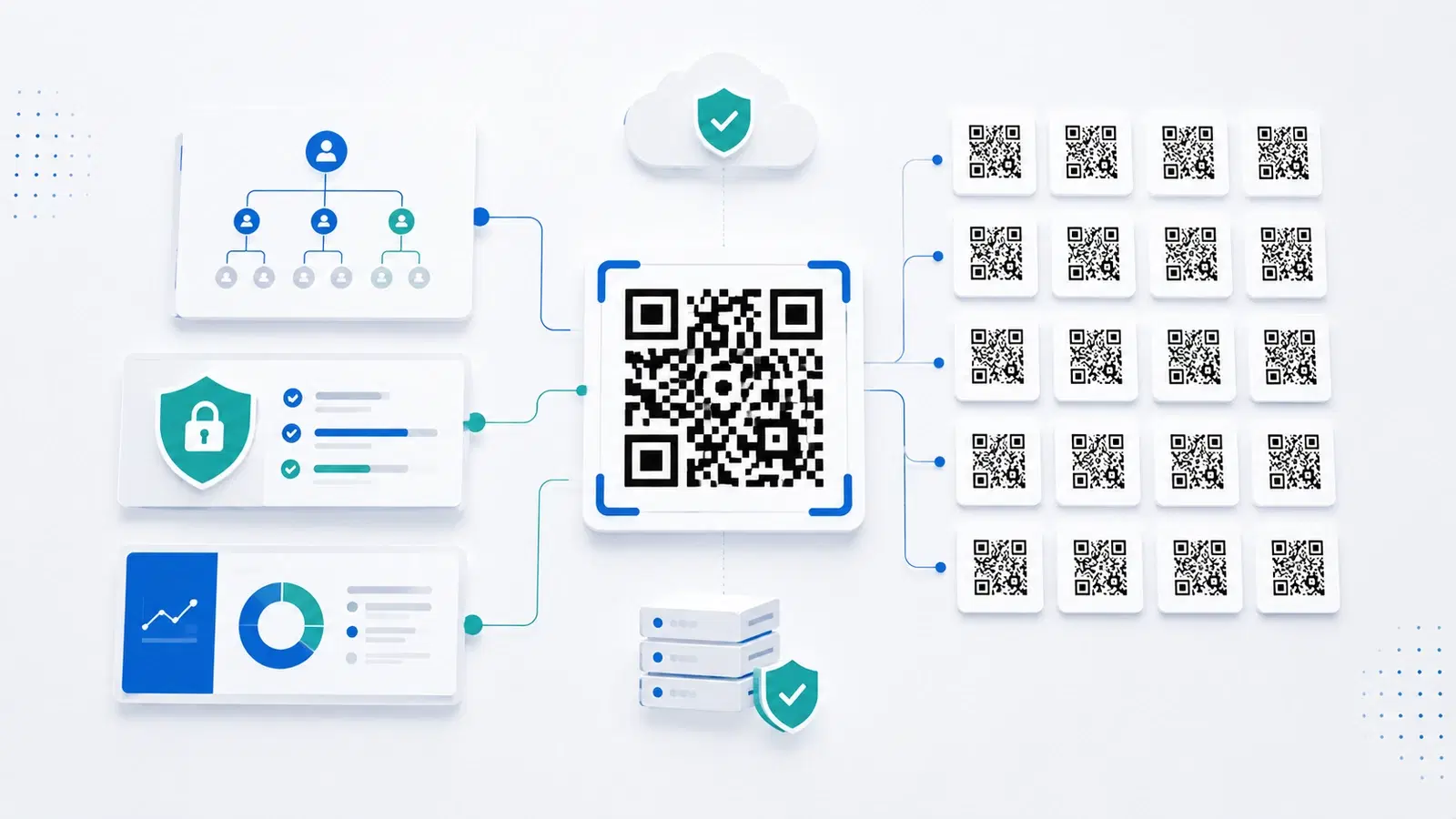
For a single user, choosing a QR code tool is simple: does it make dynamic codes, track scans, and stay reliable? At enterprise scale, the question changes completely. When hundreds of people across departments and regions create thousands of codes, the requirements expand from "does it make codes" to security, access control, integrations, uptime guarantees, and support. A tool that is perfect for one marketer can be entirely wrong for a large organization.
An enterprise QR code solution is judged less on the codes themselves, which any capable platform handles, and more on how it manages people, scale, security, and risk. Get this wrong and you inherit shadow accounts, security gaps, inconsistent branding, and codes nobody can account for. Get it right and QR codes become dependable, governed infrastructure across the whole organization.
This guide covers what actually matters when evaluating an enterprise QR code platform in 2026, organized by the concerns that separate enterprise needs from everyone else's. If you are a small or mid-sized business rather than a true enterprise, you likely do not need most of this; see the best QR generator for small business and right-size your choice.
Team Management, Roles, and Access Control
The defining enterprise challenge is not making codes; it is managing who can do what across a large group of people. This is where an enterprise solution earns its keep.
Granular roles and permissions. At scale you need more than "everyone can edit everything." Look for role-based access, admins who manage the account, editors who create and change codes, and viewers who see analytics but cannot alter anything, so each person has exactly the access their job requires and no more. This principle of least privilege is basic enterprise security applied to QR codes. See our team and workspaces guide for how this works.
Organized workspaces. Thousands of codes across departments, regions, and campaigns must be organized, not dumped in one flat list. Enterprise platforms should let you separate and group codes by team, business unit, brand, or location, so people find what they need and nobody trips over another department's codes.
Clean provisioning and offboarding. When employees join, move teams, or leave, access must be granted and revoked cleanly, immediately, and per person. A shared login or a tool that cannot cut one person's access without disrupting others is a security liability at enterprise scale.
Audit and accountability. With many people touching codes, you need to know who created or changed what. Even basic audit visibility restores the accountability that a large team otherwise loses, which matters both operationally and for compliance.
Single sign-on (SSO). Many enterprises require SSO so QR platform access is governed by the same identity system as everything else, simplifying provisioning and strengthening security. If your organization mandates SSO, confirm the platform supports it.
- Role-based access: admins, editors, and view-only, per least privilege
- Workspaces to organize codes by team, brand, region, or campaign
- Immediate, per-person provisioning and offboarding (no shared logins)
- Audit visibility into who created or changed each code
- SSO support if your organization requires it
Security, Compliance, and Brand Control
Enterprises carry risk that individuals do not, so security and governance move from nice-to-have to mandatory.
Data handling and compliance. Understand what scan data the platform collects and where it is stored, and confirm it aligns with your compliance obligations (privacy regulations, data-residency requirements, internal policy). At enterprise scale, casual data handling is a real liability. See what data QR codes track.
Access controls on sensitive codes. Some enterprise codes should not be open to anyone who scans them, internal resources, confidential documents, restricted access. Features like password protection and access controls matter when codes carry non-public information.
Brand consistency and control. Across a large organization, uncontrolled QR codes become a branding mess: inconsistent styles, off-brand colors, third-party domains showing in links. Enterprise platforms should enforce brand consistency and, critically, let all codes run on your own custom domain rather than a vendor's, so every scan reflects your brand. This connects to white-label capabilities.
Security of the redirect itself. Because dynamic codes redirect through a link, the integrity of that redirect matters. You want confidence that destinations cannot be tampered with and that the platform is a trustworthy custodian of where your codes point, since a compromised redirect on printed codes is a serious problem. Related: QR code security.
The governance mindset. The theme across all of this is governance: at enterprise scale you are not just making codes, you are managing an asset class that touches brand, security, and compliance. The right platform gives you control over all three.
Important
The biggest hidden enterprise risk is uncontrolled, shadow QR usage: individual employees making codes on random free tools, on third-party domains, with no oversight. Those codes are off-brand, unmanaged, un-auditable, and can expire or break with nobody accountable. A governed enterprise platform exists precisely to replace that chaos with control.
Integrations, API, and Scale
Enterprises rarely want a standalone tool; they want QR codes woven into the systems they already run. That means integrations, automation, and the ability to operate at volume.
API for automation and integration. At scale, generating and managing codes by hand does not work. An API lets you create codes programmatically inside your own systems, a unique code per product, per asset, per user, and pull scan data back into your analytics or CRM. For many enterprises, the API is the most important feature, because it makes QR codes a component of existing workflows rather than a separate chore.
Bulk operations. Even without deep integration, enterprises routinely need many codes at once. Robust bulk generation, creating and updating thousands of codes from a file, is essential for catalogues, inventory, and multi-location rollouts. See also inventory and asset tracking.
Fit with existing systems. Consider how the platform connects to what you already use: analytics platforms, marketing tools, CRMs, and internal systems. The more cleanly QR data flows into your existing stack, the more useful it is.
Genuine scale and performance. An enterprise platform must handle large volumes of codes and high scan traffic without degrading. Redirects must resolve quickly and reliably even under load, because at enterprise scale a slow or flaky redirect affects a lot of scans at once. Reliability is not a feature here; it is the foundation.
Data export and ownership. Ensure you can export your codes and scan data, and that you retain ownership of both. You do not want your organization's QR infrastructure and history locked inside a tool you cannot get data out of.
Pro Tip
For most enterprises, the API and bulk capabilities are the real decision-makers, not the code designer. Ask specifically: can we generate codes programmatically inside our own systems, create and update thousands at once, and pull scan data back into our analytics? If those answers are weak, the platform will not scale to how an enterprise actually operates.
Reliability, Support, and Total Value
The final enterprise concerns are about dependability and the relationship, not features on a checklist.
Uptime and permanence. For an enterprise, reliability is paramount. Your codes, potentially on millions of printed items, must keep resolving indefinitely, and the redirect service must stay up. Confirm the platform's commitment to uptime and to permanent codes that never expire. A platform whose codes could lapse is unacceptable at enterprise scale, where a failure is not one broken code but thousands. See how to make permanent codes.
Support and accountability. Enterprises need real support: responsive help, a clear point of contact, and, where appropriate, service commitments (SLAs). When something goes wrong at scale, you need to reach someone who can act, not a generic help form. Evaluate the vendor as a partner you can rely on, not just software.
Onboarding and change management. Rolling a platform out across a large organization takes planning: training, migrating existing codes, setting up roles and workspaces. Consider what onboarding support the vendor provides to make adoption smooth across many teams.
Total value, not just price. Enterprise pricing should be judged on total value: the security, control, reliability, integrations, and support you get, weighed against the cost and risk of the alternative (uncontrolled shadow usage or an under-powered tool). The right question is not "what is the cheapest option" but "what does dependable, governed QR infrastructure across our whole organization justify." For context on QR pricing generally, see the pricing comparison.
Right-size the decision. Finally, be honest about whether you genuinely need enterprise capabilities. If you do, invest in them properly. If you are actually a smaller operation, an enterprise platform is overkill; choose a solution scaled to your real size. Matching the tool to your scale, in both directions, is the core of a good decision.
Conclusion
At enterprise scale, a QR code solution is judged not on the codes but on how it manages people, security, integrations, reliability, and risk. The codes are the easy part; governance is the hard part, and it is what an enterprise platform exists to provide.
Look for granular roles and access control with clean provisioning and SSO; strong data handling, compliance alignment, access controls, and brand consistency on your own domain; an API and bulk operations that let QR codes integrate into your existing systems at volume; and, underpinning all of it, uptime, permanent codes, real support, and thoughtful onboarding. Judge the cost on total value against the alternative, which is usually uncontrolled shadow usage that carries real brand and security risk.
Above all, right-size the decision. True enterprises should invest properly in governed QR infrastructure; smaller organizations should not pay for enterprise weight they will never use. The best platform is the one matched to your actual scale and needs.
Related reading:
Explore QRForever for your organization. Start a 7-day full-access trial, no credit card needed. Team roles, custom domains, API, and permanent codes that scale with you.
Explore QRForever Solutions
Ready to Create Your Own QR Codes?
Start creating dynamic QR codes for your business today. Track analytics, update content anytime, and never reprint again.
Related Articles

QR Codes for Small Businesses: A Practical Getting Started Guide (Updated 2026)
QR codes give small businesses the same tools big brands use, for free or near-free. This 2026 guide covers the essential use cases, the one mistake that costs reprints, and how to start in an afternoon. Updated June 2026.
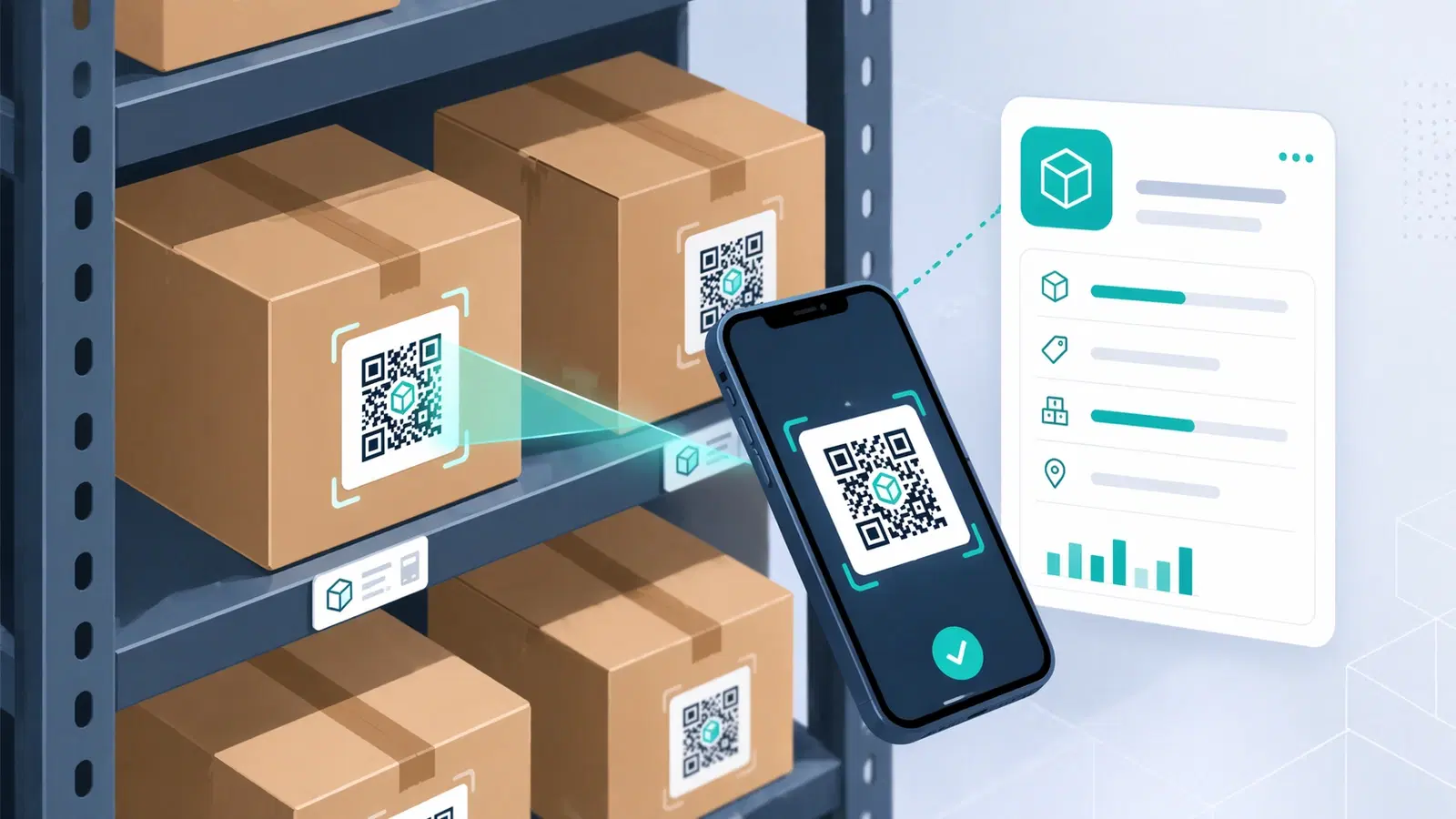
QR Code Inventory Management: Complete Asset Tracking Guide for 2026
Use QR codes to track inventory, assets, and equipment without expensive RFID hardware. Practical setup guide for small businesses, warehouses, and field teams.
How Much to Charge for QR Code Design Services (Freelancer Guide 2026)
Freelancers and agencies can charge ₹500 to ₹15,000+ for QR code work, the spread depends on what you bundle. Here's how to price QR code design services, what to include, and how to turn one-off projects into recurring revenue.