A History of QR Codes: From a Toyota Factory to a Global Standard
QR codes were invented in 1994 to track car parts on a Japanese factory floor, inspired by a game of Go. The decision to give the patent away for free is why they are everywhere today. Here is the full story.

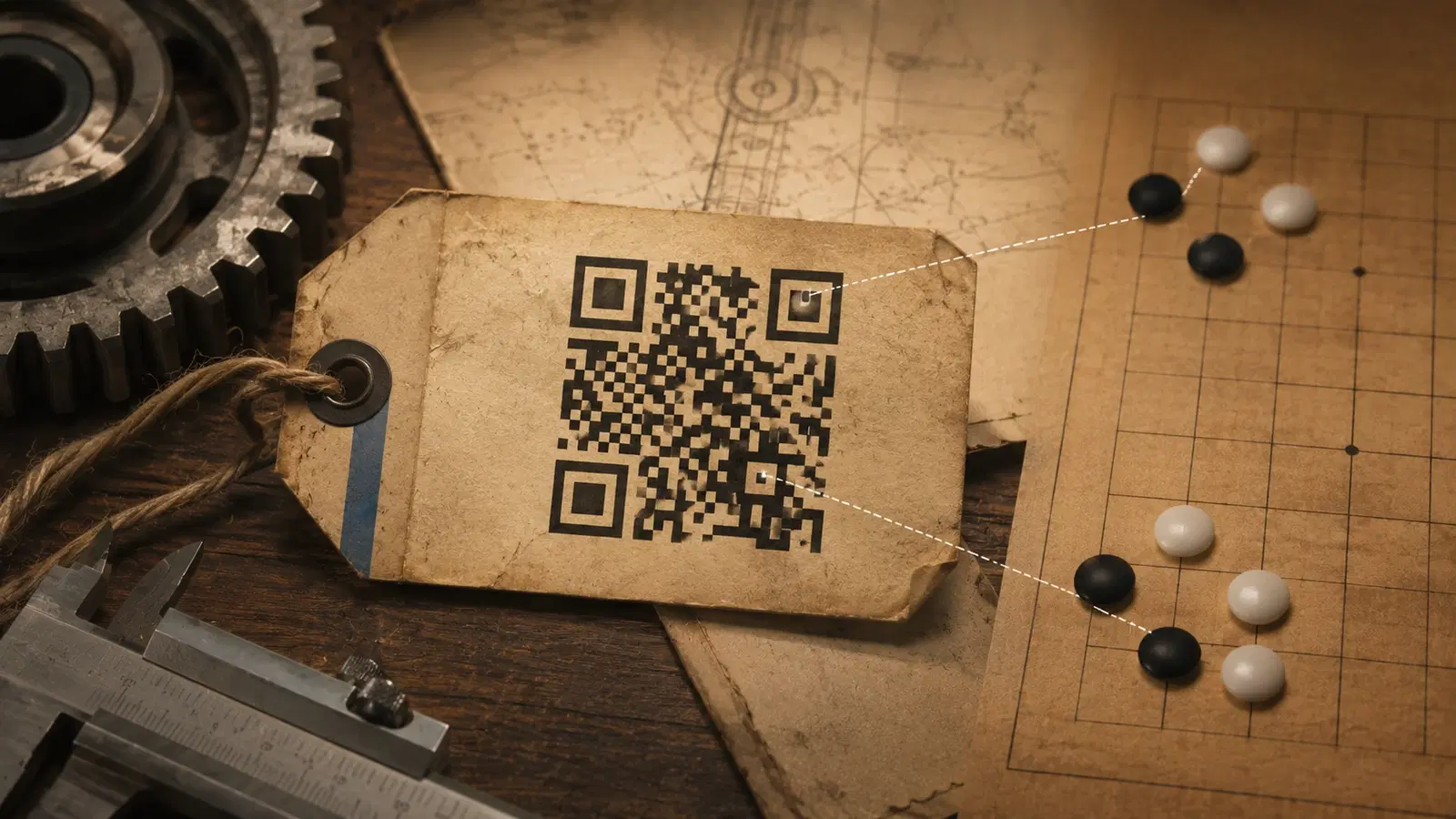
Every day, millions of people scan a small black-and-white square to see a menu, pay for something, or open a website. Almost none of them know that the pattern they are pointing their phone at was designed on a Japanese factory floor in 1994 to solve a problem about car parts, or that its inventor found the key idea while playing a board game.
The story of the QR code is genuinely good. It involves a frustrated engineer, the limitations of the barcode, a game of Go, and a corporate decision so unusual that it is arguably the entire reason QR codes exist everywhere today rather than nowhere.
This is that story: how the QR code was invented, why it was designed the way it was, the choice that made it universal, and how it went from an industrial tool to something in nearly everyone's pocket.
The Problem: Barcodes Were Not Enough
The story begins in the early 1990s at Denso Wave, a subsidiary of Toyota, in Japan's automotive manufacturing industry.
The manufacturing reality: Toyota's production system depended on tracking enormous numbers of components through the manufacturing process. Every part needed to be identified, and barcodes were the tool available.
Why barcodes were failing them: A traditional barcode is one-dimensional, storing data only in the width of its lines. It could hold roughly 20 characters, which meant a single barcode could not carry enough information about a component. Factories worked around this by putting *multiple* barcodes on a single item, sometimes as many as ten.
That workaround was miserable in practice. Workers had to scan each barcode separately, one after another. It was slow, error-prone, and exhausting across a full shift. Scanning was becoming a bottleneck in a system explicitly designed for efficiency.
The ask: Denso Wave engineers were tasked with creating something better: a code that could hold far more information, and be read far faster.
The engineer: The development team was led by Masahiro Hara. His goal was direct: create a code that could store more data than a barcode and be scanned quickly and reliably in a demanding factory environment. Speed was so central to the goal that it ended up in the name.
The Insight: Two Dimensions and a Game of Go
The core idea was to stop storing information in one direction and start storing it in two.
Why two dimensions changed everything: A barcode uses only its width. If you use both width *and* height, arranging data in a grid of small squares rather than a row of lines, you can hold vastly more information in a similar amount of space. This is the fundamental leap from the 1D barcode to the 2D QR code. See our QR code vs barcode guide for the full technical comparison.
The famous problem: how does the scanner know where the code is and which way is up? A grid of black and white squares is only useful if a scanner can find it in a cluttered image, work out its orientation, and read it correctly regardless of the angle. This was the hard part.
The Go board: The widely told account is that Hara found his answer while playing Go, the ancient board game of black and white stones on a grid. Looking at the board, with its stones arranged in patterns on a grid, he saw how a distinctive arrangement could let you instantly orient yourself within a field of similar-looking pieces.
The solution: the three corner squares. This led to the QR code's most recognizable feature: the three large square "finder patterns" in three of the four corners. Their job is orientation. A scanner spots those three squares, and from them instantly determines where the code is, how it is rotated, and which way is up.
Why three and not four: Using three corners rather than four is deliberate and clever. Because exactly one corner lacks a marker, the scanner can tell precisely how the code is oriented. Four identical corners would be ambiguous. This is why you can scan a QR code upside down, sideways, or at an angle, and it just works.
There is a further practical detail: the finder pattern's specific black-white ratio was chosen to be a pattern rarely found in ordinary images and printed materials, so the scanner can pick the code out of a busy visual field without confusion.
Pro Tip
Next time you see a QR code, look at the three corner squares. That is the orientation system inspired by a Go board, and it is the reason you can scan a code from any angle without thinking about it.
1994: The QR Code Is Released
In 1994, Denso Wave released the QR code. The name stands for "Quick Response," reflecting the design priority: it had to be read *fast*.
What it achieved:
- It could hold vastly more data than a barcode. Where a barcode managed around 20 characters, a QR code could hold thousands. (See our guide on maximum QR code data capacity.)
- It could be read from any angle, thanks to the finder patterns.
- It could be read quickly, meeting the factory speed requirement.
- It included error correction, so a code that was dirty, scratched, or partially damaged (an everyday reality in a factory) could still be read correctly. This resilience was essential for industrial use and remains one of the QR code's best features. See our error correction levels guide.
Its original life: For years, the QR code did exactly what it was built for: tracking automotive components through manufacturing and logistics. It was an industrial tool, invisible to the public. Nobody outside the factory floor had any reason to think about it.
That could easily have been the whole story: a useful, obscure industrial standard. What happened next is why it was not.
The Decision That Made It Universal
Denso Wave made a choice that, in retrospect, is the single most important event in the QR code's history.
They held the patent, and chose not to enforce it. Denso Wave patented the QR code but declared that it would not exercise its patent rights. The specification was made open, and anyone could create and use QR codes freely, without paying a licence fee.
Why this decision was so consequential: Imagine the alternative. If every business creating a QR code owed a royalty, and every scanner app owed a licence fee, the technology would have stayed locked inside industries willing to pay. Phone manufacturers would have had far less incentive to build native scanning into their cameras. Free QR generators would not exist. The technology would have remained a niche industrial standard.
By making it free, Denso Wave allowed the QR code to become infrastructure rather than a product. Anyone could build with it, and countless people did.
Standardization: The QR code went on to be adopted as an international standard, which cemented its interoperability. A QR code created anywhere can be read by any compliant reader anywhere, and that universality is precisely what makes it useful.
The lesson: An open, free, standardized technology can spread in ways a proprietary one cannot. The QR code is everywhere today in significant part because its creators chose not to charge for it. It is a genuinely rare and admirable decision, and the world got a global standard out of it.
From Factory Floor to Everyone's Pocket
The final chapter is how an industrial code ended up in everyone's hand, and it did not go smoothly.
The false start (roughly 2010 to 2012): As camera phones spread, marketers discovered QR codes and put them everywhere: billboards, magazine ads, subway posters. It failed, and quite embarrassingly. The reason was friction: you needed to download a separate scanner app before you could scan anything. Almost nobody did. Codes also led to unusable desktop websites and were placed where scanning was physically impossible. QR codes were widely declared dead.
The quiet fix (2017 onward): Apple added QR scanning directly into the iOS camera in 2017. Android followed. The fatal step, the app download, simply disappeared. You could now point the camera you already had open and it just worked.
This barely made news, but it was the decisive moment. The technology was suddenly frictionless, and had been for a few years before most people noticed.
The forcing function (2020): The pandemic gave hundreds of millions of people an unavoidable reason to scan a QR code, often for the first time since it had been fixed. Restaurants removed paper menus. You scanned, it worked instantly, and you learned that your camera does this now. That knowledge did not go away.
The permanent adoption (2020 to now): QR codes stayed, because the benefits that made them useful (instant updates without reprinting, unlimited information behind a small square, redirectable destinations) had nothing to do with the pandemic. They spread into payments, packaging, events, healthcare, construction, and dozens of contexts their inventors never imagined. We cover this arc in detail in why QR codes survived after COVID.
Where the story lands: A code designed in 1994 to track car parts, oriented by a principle borrowed from a Go board, given away for free by the company that owned it, is now scanned by people worldwide every day to pay for groceries, read menus, remember loved ones, and find lost pets. Almost none of them know any of this. That is what it looks like when an invention succeeds completely.
- 1994: Invented at Denso Wave (a Toyota subsidiary) by a team led by Masahiro Hara, to track car parts
- The three corner finder patterns solved orientation, an idea linked to the board game Go
- Denso Wave chose not to enforce its patent, making QR codes free to use
- Adopted as an international standard, ensuring universal interoperability
- 2010-2012: Failed as a marketing tool because scanning required a separate app
- 2017: Native camera scanning on iOS and Android removed the fatal friction
- 2020: The pandemic forced mass first-time use, and the habit stuck
Conclusion
The QR code was not designed to show you a restaurant menu. It was designed in 1994 to let workers on a Japanese factory floor stop scanning ten barcodes per component. It solved that problem, and it might have quietly remained an industrial tool forever.
Two decisions changed that. The first was technical: using two dimensions and the three-corner orientation system, an idea connected to a game of Go, which made the code fast, dense, and readable from any angle. The second was commercial, and arguably more important: Denso Wave held the patent and chose not to charge for it. That single choice is why QR codes became free global infrastructure rather than a licensed niche product.
The rest was timing. A failed marketing fad in 2012, a quiet platform fix in 2017 when phone cameras learned to read codes natively, and a pandemic in 2020 that gave everyone a reason to try the fixed version. Three decades after a Toyota subsidiary solved a parts-tracking problem, its solution sits in nearly every pocket on earth.
Related reading:
Create your own QR code with QRForever. Start a 7-day full-access trial, no credit card needed. Three decades of engineering, one square, yours to point anywhere.
Explore QRForever Solutions
Ready to Create Your Own QR Codes?
Start creating dynamic QR codes for your business today. Track analytics, update content anytime, and never reprint again.
Related Articles
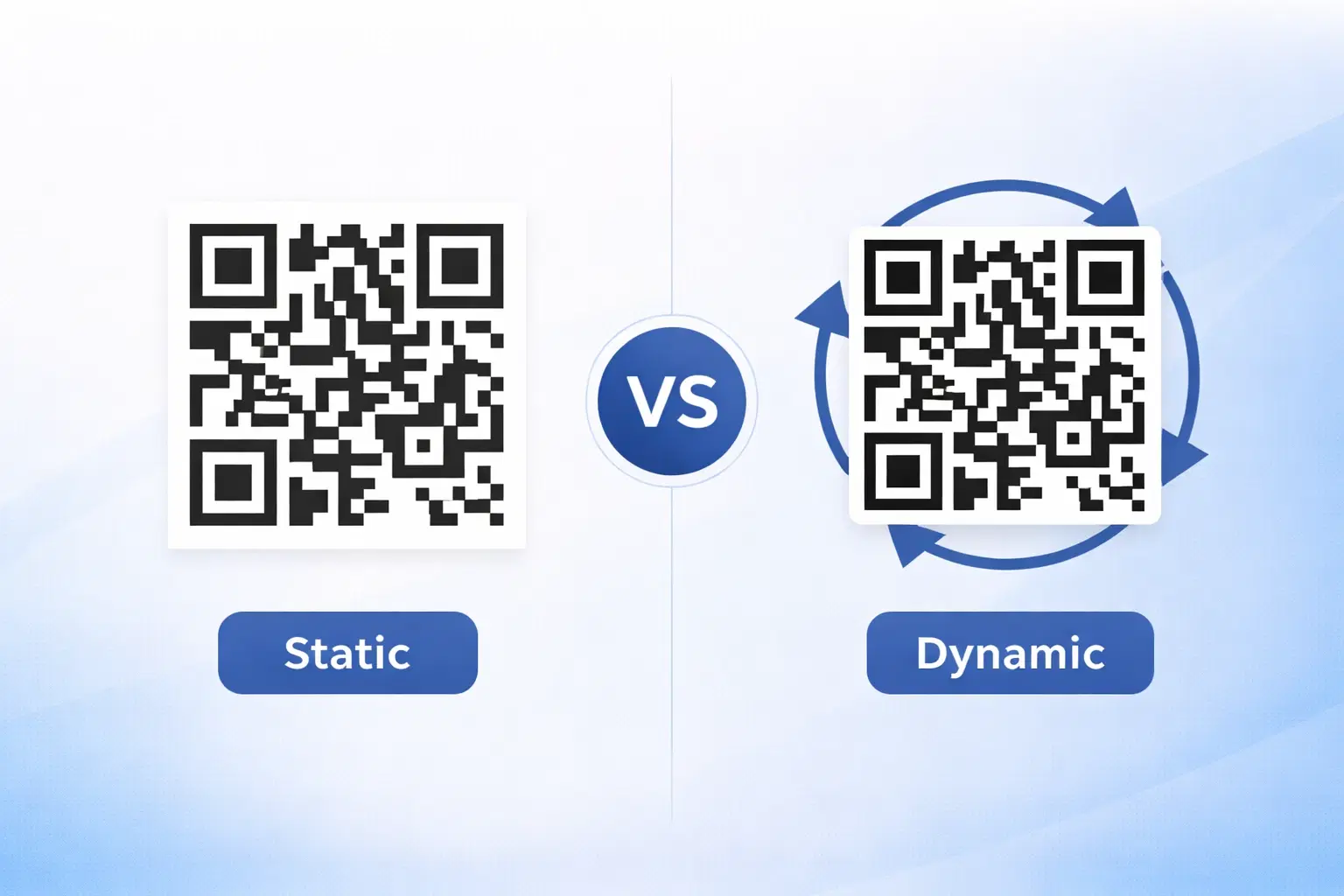
Dynamic vs Static QR Codes: Which One Should You Use? (Updated 2026)
The complete 2026 guide to dynamic vs static QR codes: when each type is right, the hidden costs of choosing wrong, and a decision framework you can apply in 60 seconds. Updated October 2026.
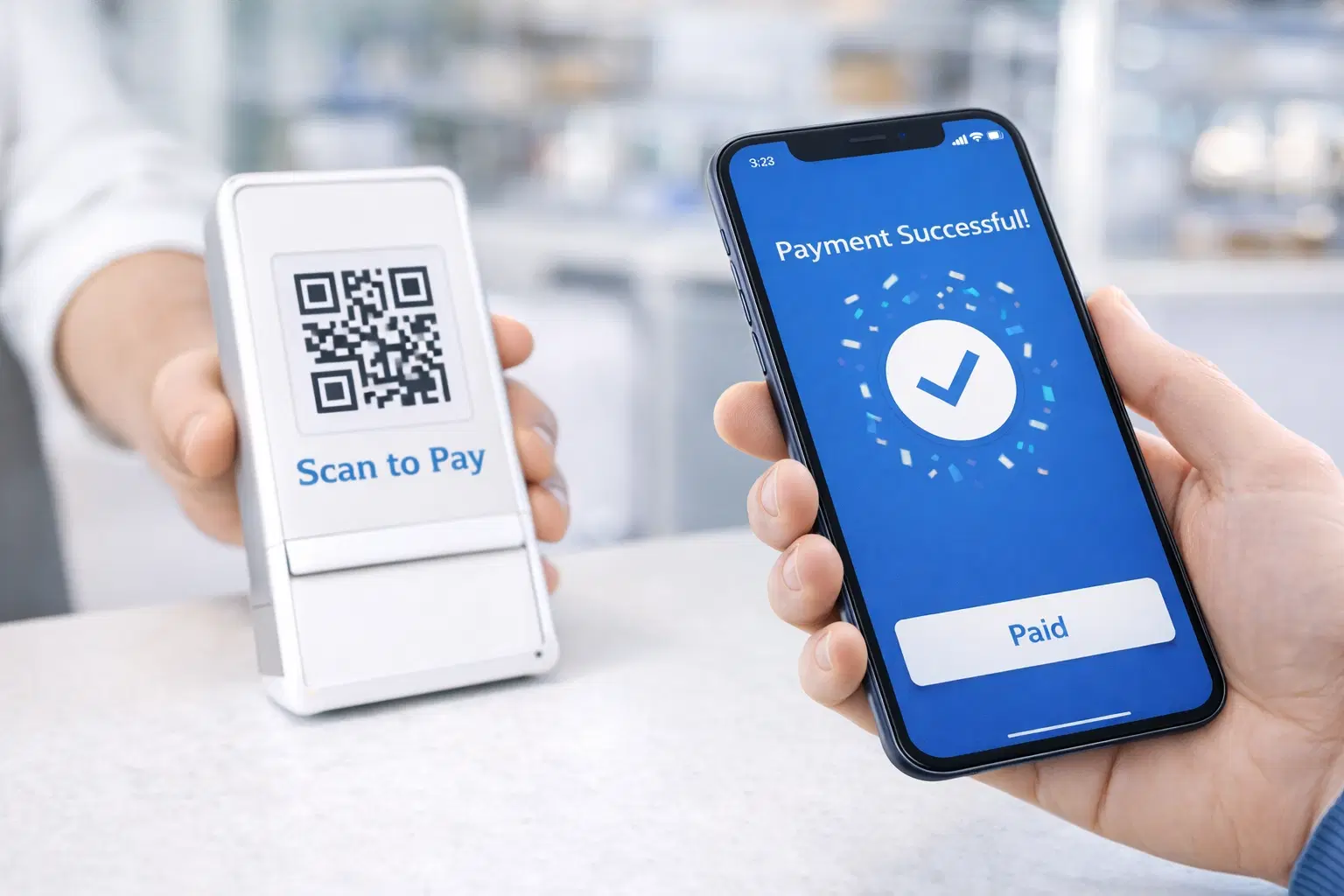
QR Code Payments Explained: How They Work and Why They Matter (Updated 2026)
QR code payments crossed record transaction volumes in 2025 and are now infrastructure, not novelty. Understand how they work: merchant-presented vs consumer-presented, UPI, security, and what it means for your business. Updated June 2026.
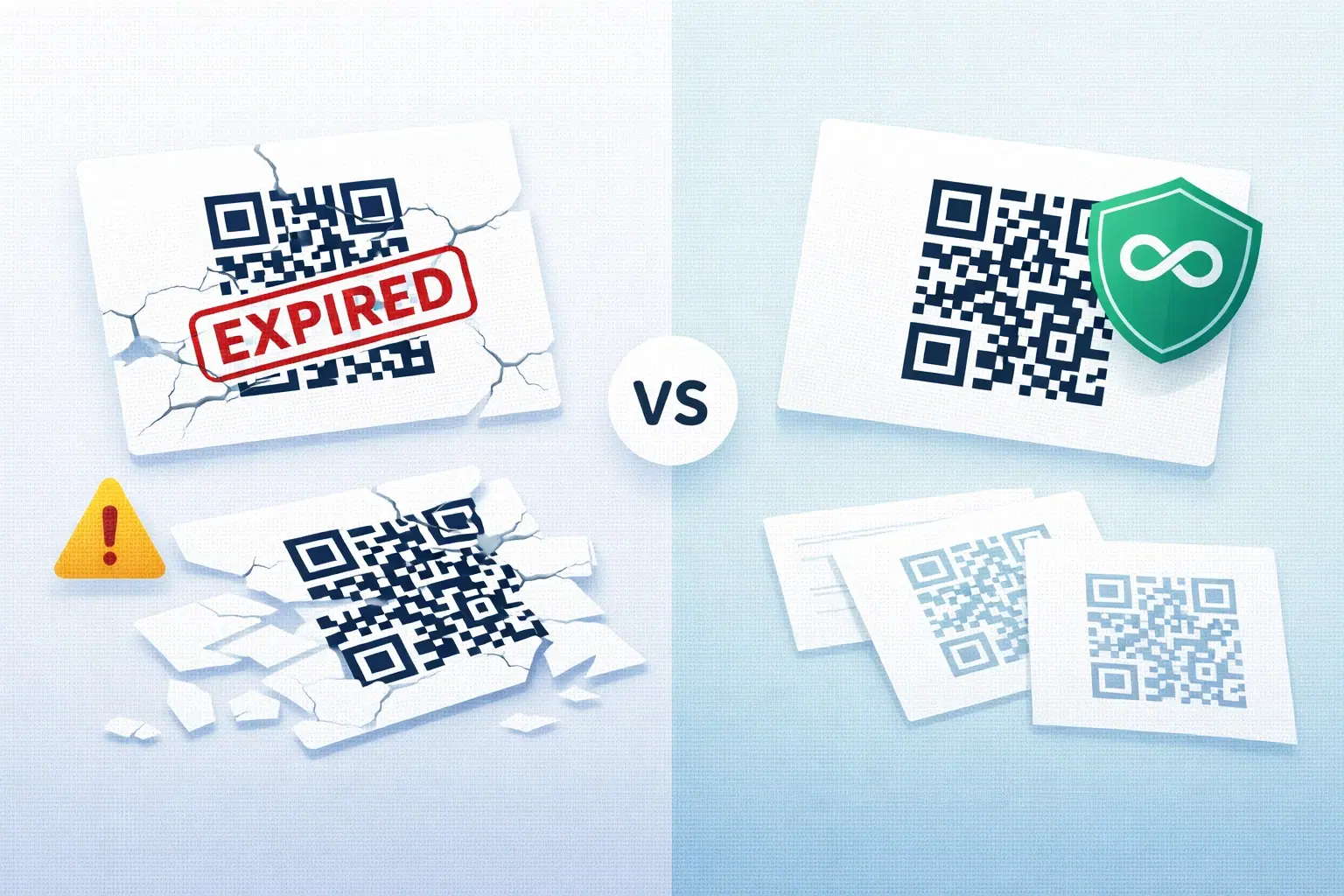
QR Codes That Never Expire: Why Most Free QR Codes Stop Working (Updated 2026)
Free QR codes often expire after 14 to 90 days, breaking printed materials and costing more in reprints than a paid plan ever would. Updated October 2026 guide with platform expiry timelines and a step-by-step rescue plan.