Why QR Codes Survived (and Thrived) After COVID: A 2026 Retrospective
QR codes had failed before. The pandemic gave them a second chance, and this time they stuck. Here is an honest look at why the technology that flopped in 2012 became permanent infrastructure by 2026, and what actually changed.

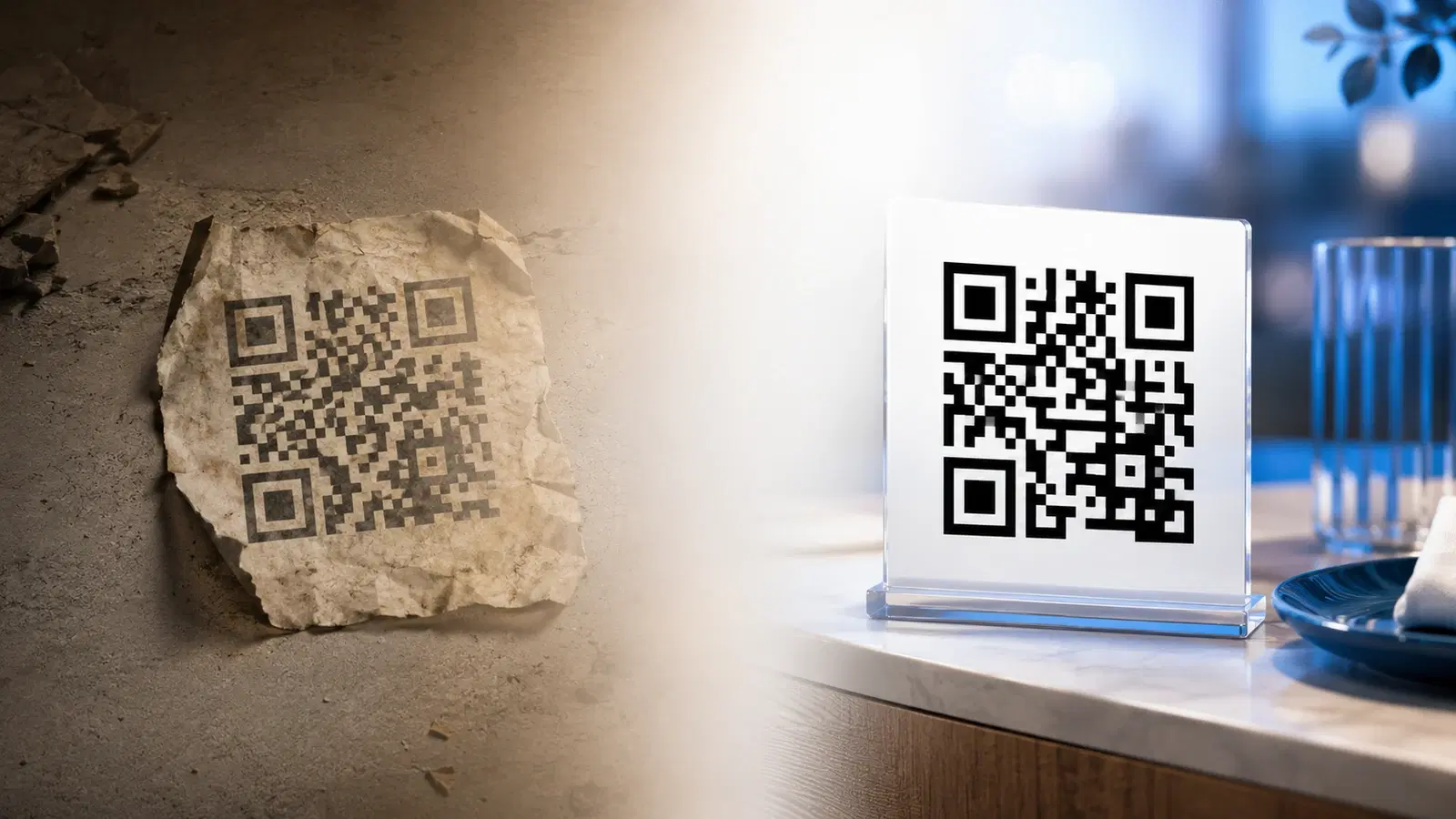
Here is a fact worth sitting with: QR codes were widely declared dead around 2012. Marketers mocked them. Blogs collected photos of QR codes on billboards, on subway ceilings, and in places nobody could possibly scan them. The consensus was that they were a solution in search of a problem.
Then the pandemic arrived, restaurants needed contactless menus, and QR codes came roaring back. But plenty of pandemic-era behaviors faded once the emergency passed. Sourdough starters were abandoned. Zoom happy hours ended. QR codes did not fade. They kept growing.
That is the interesting question, and it is not "did COVID cause QR adoption." Obviously it did. The real question is why they stuck around after the reason for adopting them disappeared. This retrospective looks honestly at why QR codes failed the first time, what genuinely changed, and why they are now permanent rather than a leftover.
Why QR Codes Actually Failed the First Time
The 2010-2012 QR code failure is usually blamed on the technology being "ahead of its time." That is too generous. It failed for specific, concrete reasons.
You needed a separate app. This was the killer. To scan a QR code, you had to first download a QR scanner app. Think about what that asked of someone: see a mysterious square, be curious enough to go to an app store, search for a scanner, download it, open it, and then scan. Almost nobody completed that chain. The friction was fatal, and it doomed the technology regardless of how good the idea was.
The destinations were terrible. Codes often led to desktop websites that were unusable on a phone, or to a generic homepage with no connection to whatever prompted the scan. People who did push through the friction were punished with a bad experience, and did not try again.
The placements were absurd. QR codes appeared on billboards along highways, in subway tunnels with no signal, on television screens, and in magazine ads with no context. Marketers were adding them because they seemed modern, without thinking about whether a scan was even possible, let alone worthwhile.
There was no reason to scan. Most codes offered nothing. No benefit, no explanation, no reason. Just a square. "Scan this" is not a value proposition.
The honest summary: QR codes did not fail because people were not ready. They failed because the experience was genuinely bad, from a required app download through to a useless destination. The mockery was deserved.
The One Change That Mattered Most
Between the failure and the revival, one thing changed that mattered more than everything else combined: phone cameras started reading QR codes natively.
Apple added QR scanning to the iOS camera in 2017. Android followed with native support. Suddenly the fatal friction was gone. No app download, no search, no separate tool. You point the camera you already have open, and it just works.
Why this single change was decisive: Every other criticism of QR codes was solvable with better practice: better destinations, better placements, clearer value. But the app-download requirement was structural. No amount of good marketing could overcome it, because it broke the chain before it started.
Once the camera read codes natively, scanning went from a multi-step chore to a one-second reflex. That is the difference between a technology nobody uses and one everybody uses.
The lesson worth generalizing: QR codes did not need to become better. They needed the friction to be removed by the platform. A lot of "failed" technologies are really just technologies waiting for a friction to disappear. The idea was always sound; the path to it was broken.
By the time the pandemic arrived, the fix had been quietly shipped for a few years. The infrastructure was ready and waiting. See our how QR codes work guide for the technical side.
Pro Tip
The QR code story is a useful reminder that most technology adoption failures are friction failures, not idea failures. Ask what single step is breaking the chain, because removing it often matters more than improving everything else.
What COVID Actually Did (and Did Not Do)
It is tempting to say the pandemic caused QR adoption. It is more accurate to say it forced a mass trial of a technology that had quietly become good.
What COVID actually did: It gave millions of people a compelling, unavoidable reason to scan a QR code for the first time since the technology got fixed. You sat down at a restaurant, there was no paper menu, and the only way to eat was to scan. That is about as strong a forcing function as exists.
Why that mattered so much: It broke the habit barrier. Most people had never scanned a QR code with their native camera, and did not know it worked so easily. One forced scan taught them. The learning transferred immediately: once you know your camera reads codes, you can scan any code, anywhere.
What COVID did NOT do: It did not make QR codes good. They were already good by 2020 thanks to native camera support. The pandemic did not improve the technology at all. It simply created the circumstances for people to discover that it had improved.
The crucial distinction: If QR codes had still required an app download in 2020, the pandemic would not have saved them. Restaurants would have tried, customers would have failed, and everyone would have gone back to paper. The pandemic worked as a catalyst precisely because the underlying friction had already been fixed.
COVID was the demand shock that revealed a supply-side fix that had already happened. That is why the adoption stuck when the emergency ended.
Why They Did Not Fade Like Other Pandemic Habits
Many pandemic behaviors reverted. QR codes did not. The reason is that QR codes solved problems that existed before the pandemic and continued after it.
The contactless rationale disappeared. The other benefits did not. Restaurants initially adopted QR menus for hygiene. But they kept them because a digital menu can be updated instantly when prices change or a dish sells out, costs nothing to reprint, holds more detail than a printed menu, and can be read in dim lighting on a bright phone screen. Those benefits had nothing to do with COVID and did not go away.
Businesses discovered the second use case. A restaurant that put a QR code on the table for a menu soon added one for Google reviews. A salon that used one for bookings added one for loyalty. Once a business has one working QR code, the marginal cost of the next is nearly zero, and the second use case is often more valuable than the first.
The habit was already formed. Hundreds of millions of people had, by then, scanned a code and found it easy. That knowledge does not un-happen. A formed habit with no friction persists.
Dynamic codes made them genuinely useful, not just convenient. The ability to change a code's destination after printing turned QR codes from a static shortcut into a manageable business asset. Printed materials last years while the things they point to change constantly, and dynamic codes resolved that permanently. See dynamic vs static QR codes.
The pattern: Sourdough faded because it solved a problem that only existed in lockdown (boredom, empty shelves). QR codes persisted because they solved problems that predated the lockdown and outlasted it.
- Native camera scanning removed the fatal app-download friction
- The pandemic forced a mass first trial, teaching the habit
- Benefits beyond hygiene (instant updates, no reprints, more detail) kept them useful
- Businesses found second and third use cases once the first worked
- Dynamic codes turned them into a manageable long-term asset
What This Teaches About the Next Decade
The QR code arc from mocked failure to invisible infrastructure carries a few lessons worth holding onto.
Judge technologies by their friction, not their concept. QR codes were the same idea in 2012 and 2022. The concept was never the problem. The path to using it was. Before writing off a technology, ask whether the idea is bad or the path is broken. Those have very different futures.
Mass behavior change usually needs a forcing function. People rarely adopt a new habit because it is marginally better. They adopt when circumstances leave no alternative, and then keep it if it turns out to be genuinely good. QR codes needed both: a fix, and then a reason to try the fixed version.
Boring adoption is real adoption. QR codes are no longer exciting, and that is precisely the sign they succeeded. The technologies that matter end up unremarkable. Nobody is impressed by a QR menu anymore; they just use it. Invisibility is the destination.
The best implementations disappear. The businesses getting the most from QR codes are not thinking about QR codes at all. They are thinking about filling appointments, collecting reviews, and reducing phone calls. The code is incidental. That is the correct relationship to have with a tool.
What is next: The interesting frontier is not QR codes getting better. It is the widening set of frictions people realize a QR code can remove, in industries that never considered it. That is why the emerging use cases in 2026 (memorials, construction safety, pet tags, book marketing) look nothing like the restaurant menus that reintroduced them. See our QR code trends 2026 article for where that is heading.
Conclusion
QR codes did not survive the pandemic because of the pandemic. They survived because the fatal friction (needing a separate app) had been quietly removed years earlier by native camera support, and the pandemic simply forced hundreds of millions of people to discover that fact.
Once they discovered it, the habit stuck, because the benefits that kept QR codes useful (instant updates, no reprinting, unlimited information behind a small square, and the ability to redirect a printed code) had nothing to do with contactless hygiene and did not disappear when the emergency did.
The technology that was mocked as a failure in 2012 is now genuinely invisible infrastructure, and its second act had almost nothing to do with the technology improving. It had to do with a platform removing one step. That is a lesson worth remembering the next time something is written off as a solution in search of a problem.
Related reading:
Create a dynamic QR code with QRForever. Start a 7-day full-access trial, no credit card needed.
Explore QRForever Solutions
Ready to Create Your Own QR Codes?
Start creating dynamic QR codes for your business today. Track analytics, update content anytime, and never reprint again.
Related Articles

The Future of QR Codes: Predictions for 2026 and Beyond
What is coming next for QR codes: AR integration, AI personalization, and payment evolution. An honest look at which predictions materialized, which did not, and what to expect. Updated July 2026.
QR Code Trends 2026: 10 New Use Cases Emerging This Year
QR codes have moved well past restaurant menus. From packaging transparency to memorial pages, event access, and offline creator growth, here are ten use cases genuinely gaining ground in 2026 and what they signal about where QR is heading. Updated September 2026.

QR Code Statistics 2026: What Over 70,000 Real Scans Reveal
Most QR code statistics online are recycled estimates. These are not. This report analyzes more than 70,000 real, anonymized QR code scans across the QRForever platform in 2026: which devices, which countries, which QR types, and what it means.