How to Print a QR Code on a T-Shirt or Apparel (Setup, Materials & Mistakes): 2026
A QR code on a t-shirt is a wearable link: to your brand, music, portfolio, or campaign. But fabric, stretch, and folds make apparel QR codes uniquely tricky. Here's how to print one that actually scans, with the materials and mistakes to know.

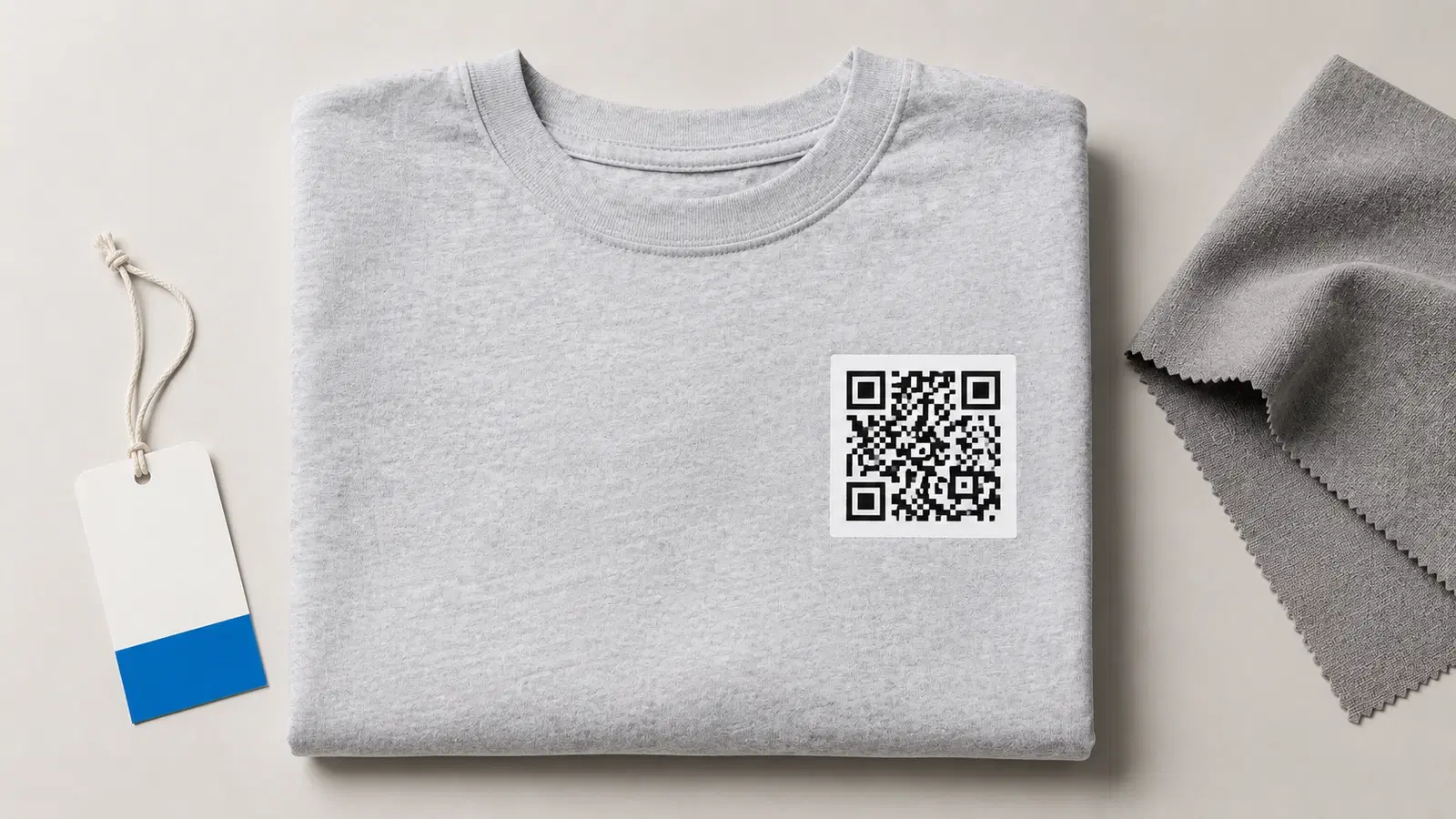
A QR code on a t-shirt or apparel turns clothing into a wearable link: to a brand, a band's music, an artist's portfolio, a campaign, an event, or a personal profile. Streetwear brands, musicians, event organizers, and marketers all use apparel QR codes to bridge physical presence and digital engagement.
But apparel is one of the trickiest surfaces for QR codes. Fabric stretches, folds, wrinkles, and curves around the body. All of which can distort a QR code into something unscannable. Printing methods, fabric choice, placement, and sizing all matter more here than on flat paper.
This guide covers how to print a QR code on apparel that actually scans reliably: the printing methods, the materials, the sizing and placement rules, and the mistakes that produce a great-looking shirt with a useless code.
Use Dynamic QR Codes for Apparel (Non-Negotiable)
Before anything about printing, one rule: use a dynamic QR code for apparel. Always.
Why this is non-negotiable for clothing: Apparel is expensive to produce and lives for years. A run of branded t-shirts, hoodies, or event merch represents real money and stays in circulation indefinitely. People wear that shirt for years.
If you print a static QR code and your destination changes: a band's music moves platforms, a campaign ends, a website is redesigned, a portfolio relocates. Every garment becomes a dead link permanently. You cannot recall or reprint shirts people already own and wear.
With a dynamic QR code, you change the destination URL anytime. The shirt printed two years ago still works because the code points to a redirect you control. Repoint it from "2026 tour dates" to "2027 tour dates", same shirts, current destination.
The cost math: A garment print run costs significant money. A dynamic QR code costs a few dollars a month. Using a static code to save that tiny amount risks making an entire apparel run worthless the moment a URL changes. It's a clear decision.
Plus, you get analytics: A dynamic code tells you how many times your apparel codes get scanned. Real data on whether your wearable marketing works.
See QR codes that never expire for the full reasoning.
Important
Never use a static QR code on apparel. Clothing lasts for years and can't be recalled. If your destination URL ever changes, and over a garment's lifetime it almost certainly will, a static code makes every shirt a dead link forever. Dynamic codes are the only sensible choice for apparel.
Printing Methods for QR Codes on Fabric
Different apparel printing methods produce different QR code quality. Here's how each performs:
Screen Printing:
- Quality for QR codes: Excellent: sharp, high-contrast, durable
- Best for: Larger runs, bold simple QR codes
- Notes: The gold standard for crisp, scannable QR codes on fabric. High contrast and clean edges. Ideal for black-on-light or light-on-dark codes.
DTG (Direct-to-Garment):
- Quality for QR codes: Very good: high detail, handles fine patterns
- Best for: Smaller runs, detailed or colored QR codes
- Notes: Prints directly into the fabric with high resolution. Good for QR codes because it captures fine module detail. Works well on cotton.
Heat Transfer Vinyl (HTV):
- Quality for QR codes: Good: clean edges, but solid vinyl
- Best for: Small runs, individual items
- Notes: Cut or printed vinyl heat-pressed onto fabric. Sharp edges, but the vinyl sits on top of the fabric (less breathable). Reliable scannability.
DTF (Direct-to-Film):
- Quality for QR codes: Very good: sharp, durable, works on many fabrics
- Best for: Versatile runs across fabric types
- Notes: Increasingly popular. Good detail and durability across cotton, polyester, blends.
Sublimation:
- Quality for QR codes: Excellent on polyester. Sharp and permanent
- Best for: Polyester/synthetic apparel, all-over prints
- Notes: Dye becomes part of the fabric. Very durable and sharp, but only works on polyester and light colors.
Embroidery:
- Quality for QR codes: Risky. Avoid for QR codes
- Notes: Thread can't reliably reproduce the fine, precise squares a QR code needs. Embroidered QR codes frequently fail to scan. Avoid unless extensively tested.
The recommendation: Screen printing (runs) or DTG/DTF (detail and smaller runs) give the most reliable scannable QR codes. Avoid embroidery for QR codes.
Sizing and Placement for Scannability
Apparel QR codes fail most often due to size and placement, not printing quality.
Sizing:
- Minimum size: Larger than you'd use on paper: at least 5cm × 5cm (2 inches), ideally larger
- Why bigger: The code will be scanned from a distance (someone scanning a stranger's shirt across a room), and fabric distortion eats into the error margin
- Rule of thumb: When in doubt, go bigger. An oversized apparel QR code scans easily; an undersized one frustrates.
Placement. This is critical: The placement determines whether the code stays flat and scannable when worn.
Good placements (stay relatively flat):
- Upper back (between shoulder blades): The flattest, most stable area on a worn shirt. Best placement for scannability. Someone behind you can scan it.
- Chest (flat area, not over the curve): Works if positioned on the flatter part
- Sleeve (upper arm): Can work if the area is flat enough
Bad placements (distort the code):
- Over the chest curve / bust: Fabric curves, distorting the code
- Lower front (stomach area): Wrinkles and folds when sitting/moving
- Anywhere across a seam: Seams break the pattern
- Tight/stretchy areas: Stretch distorts the modules
The upper-back rule: For a QR code meant to be scanned by others (the most common apparel use case: marketing, bands, events), the upper back is the best placement. It's flat, stable, visible, and at a good height for someone behind to scan.
For sizing principles, see our QR code size guide.
Pro Tip
Test your apparel QR code on an actual worn garment before committing to a full run. Print one sample, put it on a person, and scan it from a few feet away: standing, sitting, and moving. Fabric behaves completely differently on a body than flat on a table.
Design and Contrast for Fabric
Fabric introduces design challenges that flat printing doesn't:
Contrast is everything:
- Use maximum contrast: dark QR code on light fabric, or light QR code on dark fabric
- Avoid low-contrast combinations (gray on white, dark blue on black). Fabric texture reduces effective contrast further
- The fabric's texture and weave already reduce scan reliability; don't compound it with weak contrast
Add a solid background block:
- Print the QR code inside a solid-color rectangle (e.g., a white box around a black code) rather than directly on patterned or textured fabric
- This guarantees the quiet zone and contrast regardless of the garment color or pattern
- Especially important on heathered, patterned, or dark textured fabrics
Error correction:
- Use high error correction (H level) for apparel
- Fabric distortion, folds, and wear all "damage" the code from the scanner's perspective; high error correction tolerates more of this
- Most platforms let you set this, or set it automatically when you add a logo
Keep it simple:
- Apparel is not the place for heavily stylized QR codes with gradients and intricate patterns
- A clean, high-contrast, simple QR code with strong error correction scans far more reliably on fabric
- You can still add a small logo, but keep the overall code clean
Color bleed consideration: Some printing methods cause slight color bleed on fabric. A QR code's crisp edges can soften, merging modules. Screen printing and DTG handle this best; test if using other methods.
For design principles, see our QR code design guide.
Common Apparel QR Code Mistakes
Avoid these specific apparel pitfalls:
Mistake 1: Static QR codes. Covered above but worth repeating. It's the #1 mistake. Apparel lasts years; static codes break permanently when URLs change. Always dynamic.
Mistake 2: Too small. Apparel codes need to be larger than paper codes. Undersized codes are the most common scannability failure.
Mistake 3: Bad placement (over curves/folds). A code over the bust, stomach, or a seam distorts when worn. Use the flat upper back or flat chest area.
Mistake 4: Low contrast on textured fabric. Fabric texture eats contrast. Use maximum contrast and a solid background block.
Mistake 5: Not testing on a worn garment. The single most important test. A code that scans flat on a table may fail completely on a moving body. Always test worn.
Mistake 6: Embroidery. Thread can't reliably reproduce QR precision. Avoid embroidered QR codes.
Mistake 7: Ignoring wash durability. Some printing methods fade or crack after washing, degrading the code over time. Choose a durable method (screen print, sublimation, quality DTG/DTF) and consider how the code will look after 20 washes.
Mistake 8: No call-to-action. A bare QR code on a shirt is mysterious. A small line of text ("Scan for our music," "Scan to shop") dramatically increases scans.
For the general list, see our 15 common QR code mistakes.
- Always dynamic (apparel outlives any static URL)
- Larger than paper: minimum 5cm, bigger is better
- Place on flat upper back or flat chest, never over curves/seams
- Maximum contrast + solid background block on textured fabric
- High error correction (H level) for distortion tolerance
- Test on an actual worn garment before the full run
- Choose wash-durable printing (screen, sublimation, quality DTG/DTF)
Conclusion
A QR code on apparel is a genuinely effective wearable marketing tool (for brands, musicians, events, and creators), but fabric makes it one of the trickier surfaces to get right. Success comes down to a few rules: always use a dynamic code (apparel outlives any static URL), print large with maximum contrast on a solid background, place it on the flat upper back, use high error correction, choose a durable printing method, and (above all), test on an actually-worn garment before committing to a run.
Get those right and you have wearable links that work for years, redirectable to wherever your brand needs them to point, with scan data telling you they're working. Get them wrong and you have great-looking shirts with dead, unscannable codes, an expensive mistake at apparel-run scale.
Related reading:
Create a dynamic QR code for your apparel with QRForever. Start a 7-day full-access trial, no credit card. Redirect it anytime as your brand evolves, and track every scan from your merch.
Explore QRForever Solutions
Ready to Create Your Own QR Codes?
Start creating dynamic QR codes for your business today. Track analytics, update content anytime, and never reprint again.
Related Articles
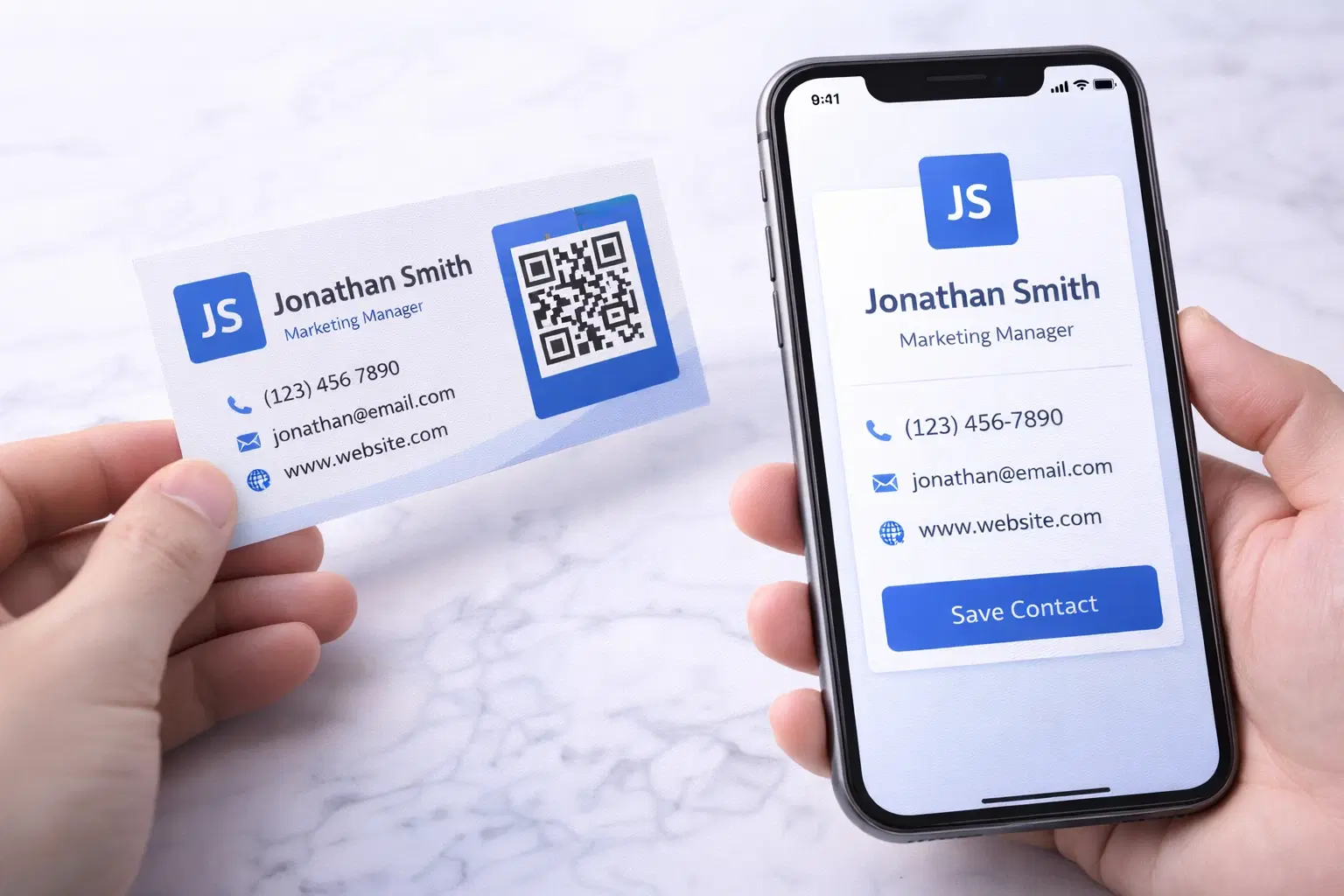
vCard QR Codes: The Complete Guide to Digital Business Cards (Updated 2026)
Create a vCard QR code that shares your contact info instantly, and updates itself when your job, phone, or email changes. Complete guide with placement strategy and networking scripts. Updated September 2026.
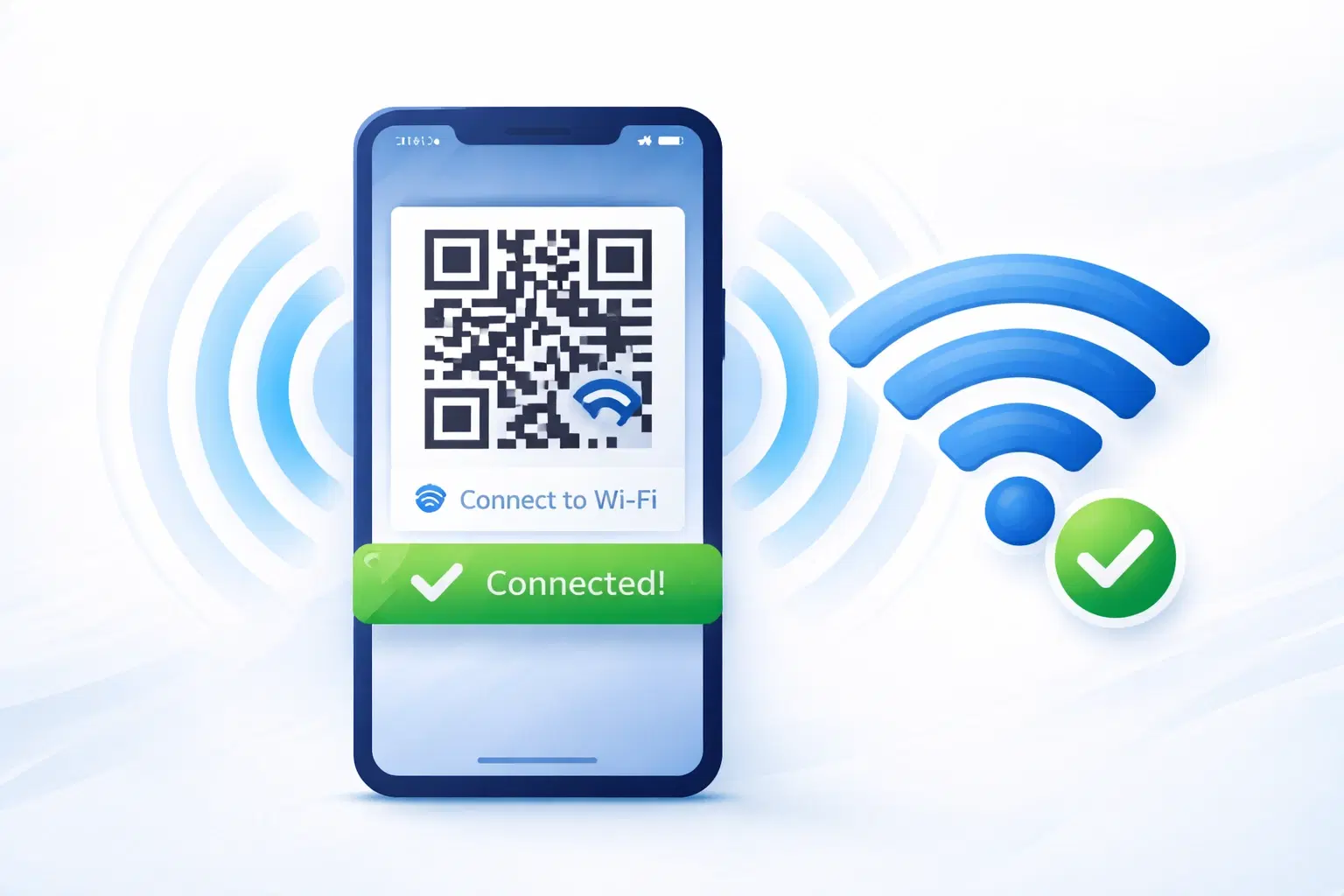
WiFi QR Codes: How to Share Your Network Password Instantly (Updated 2026)
Stop spelling out WiFi passwords letter-by-letter. WiFi QR codes let guests connect in seconds: for your home, café, hotel, or office. Updated 2026 setup guide with platform-specific instructions.

How to Set Up QR Code Check-In for Events: Step-by-Step Guide 2026
Replace paper lists and manual check-ins with a fast, contactless QR code system. Full setup guide for conferences, workshops, weddings, and corporate events.