QR Codes for Healthcare
Improve patient care and operational efficiency
Healthcare QR codes streamline patient check-in, provide access to medical information, enable contactless payments, and improve wayfinding in large facilities. HIPAA-compliant solutions for modern healthcare.
Print once. Update forever.
The whole point of a dynamic QR code for healthcare: you commit to the print, not to a single link.
Update after it is printed
Change where any QR code points anytime. The printed code itself never changes, so fix a link or swap a menu in seconds.
No reprints, no scan limits
Never reorder prints to correct a typo or a dead link, and there is no cap on how many times your codes get scanned.
Your codes stay live
Every code keeps working for as long as you are subscribed, and your data is never deleted. Pause your plan and redirects pause, never break, then come back instantly.
No credit card required · 7-day full trial · cancel anytime
How Healthcare Use QR Codes
Real-world applications that drive results in your industry
Patient Check-In
Touchless check-in reduces wait times and improves hygiene.
Appointment Booking
Scan to book, reschedule, or confirm appointments.
Medical Information
Access patient education materials, post-care instructions.
Wayfinding
Navigate large hospitals and medical campuses easily.
Prescription Info
Medication details, dosage reminders, and refill requests.
Feedback Collection
Patient satisfaction surveys for quality improvement.
Key Benefits
QRForever Solutions for Healthcare
Explore our products tailored for your needs
Make a free QR code for Healthcare
Generate a permanent QR code in your browser, no signup, no expiry. Choose URL, vCard, WiFi, or Text. Download as PNG or SVG.
Enter your URL
Tip: include https:// so the QR opens the link correctly when scanned.
Customize
Your QR code will appear here
We'll pre-fill the dynamic version with everything you set above.
Always free · No signup · No expiry
Looking for more options? Open the full QR generator
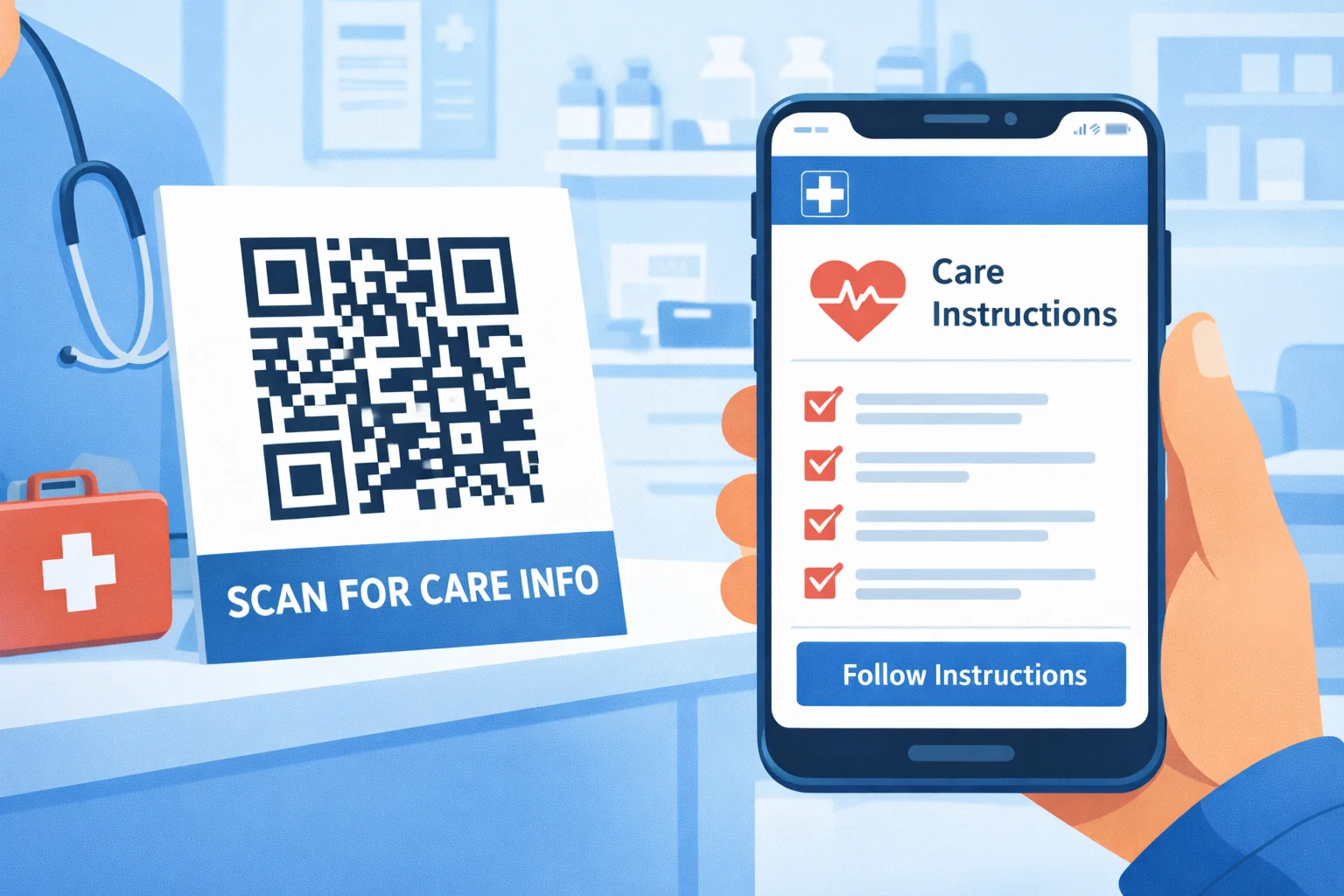
Healthcare QR Codes: Improving Patient Experience and Safety
Healthcare facilities face unique challenges: managing patient flow, ensuring hygiene, providing accessible information, and complying with strict regulations. QR codes address all of these challenges while improving both patient experience and operational efficiency. From the moment a patient walks through the door, QR technology can streamline their journey.
The check-in process alone represents a significant opportunity for improvement. Traditional paper forms spread germs, take time to process, and often result in data entry errors. QR code check-in allows patients to complete forms on their own devices, automatically populates their information in your system, and reduces wait room crowding. The result: faster appointments, happier patients, and less administrative burden on staff.
Beyond check-in, healthcare QR codes serve critical functions throughout the patient experience. Wayfinding codes help patients navigate complex medical campuses. Medication information codes provide drug interactions and dosing reminders. Post-visit instruction codes ensure patients have access to care guidelines. Each application improves outcomes while reducing the need for paper that could become contaminated or lost.
Contactless Check-In
Reduce germ transmission and wait times with touchless patient registration on personal devices.
Wayfinding
Help patients navigate large hospital complexes with department-specific QR codes.
Patient Education
Provide instant access to post-procedure instructions, medication guides, and health resources.
Appointment Management
QR codes in appointment reminders reduce no-shows by enabling one-tap confirmation or rescheduling.
How to Set Up QR Codes for Healthcare
A practical, step-by-step walkthrough you can follow today, no design or technical skills needed.
- 1
Map the patient journey before generating codes
List the points where a patient needs information or action: check-in, waiting-room wayfinding, a specific department, post-visit instructions. Create one code per point so a check-in code never gets confused with a wayfinding code, and so each scan tells you what the patient was trying to do.
- 2
Keep protected health information off the QR destination
Point check-in codes at your existing patient portal or a generic intake form that authenticates the patient on their own device. The QR is just a doorway, so the page behind it should handle identity and never expose anything patient-specific that a passerby could scan into.
- 3
Brand codes and post them as clear signage
Add your facility logo and a short instruction like 'Scan to check in' so the code reads as official signage in a clinical setting. Place check-in codes at the front desk and kiosks, and wayfinding codes at corridor decision points and elevator banks.
- 4
Print large for waiting rooms and corridors
Patients scan wayfinding and check-in codes from a standing distance, sometimes from a wheelchair or with reading glasses off, so print well above the size you would use on a handout. Test scanning from a realistic distance and angle in the actual hallway.
- 5
Update destinations as forms and locations change
When an intake form is revised or a department relocates, edit the code's destination once and every posted sign stays current without reprinting. Review scan counts to see which wayfinding points and instruction sheets patients actually use.
The privacy line has to be drawn first in any healthcare QR rollout. A QR code is fundamentally a link, so the safe pattern is to encode a path to an authenticated destination, your patient portal or an intake form that verifies identity on the patient's own device, and never to encode anything patient-specific in the code itself. That keeps a poster on a public waiting-room wall from becoming a data exposure, since a scan only opens a login, not a record. Built this way, touchless check-in reduces shared clipboards and front-desk congestion while the sensitive handling stays inside systems already designed for it, the practical reading most compliance reviewers will want to see.
Wayfinding and post-visit instructions are where healthcare QR pays off in patient experience. Large medical campuses are hard to navigate, and a department-specific code at each corridor decision point gets a patient to the right place faster than a single campus-map code, while scan counts quietly reveal which junctions confuse people most. Post-visit instruction codes printed on discharge sheets give patients durable access to medication guidance they would otherwise lose, and because the destination is editable you can correct that guidance without recalling printed material. Throughout, keep an obvious staffed and non-QR path available, because the goal is to lighten the front desk and reduce contamination points, not to gate care behind a smartphone.
Pro tips for Healthcare
- Treat the QR as a doorway, never a data store. Encode a link to an authenticated portal page, not patient information itself, so a code on a waiting-room wall can never leak anything a stranger could scan.
- Print check-in and wayfinding codes much larger than handout codes. The patient scanning from a waiting-room chair or a wheelchair is several feet back, and a handout-sized code on a wall poster is a frequent, avoidable failure.
- Give each department or floor its own wayfinding code rather than one campus map code. Department-specific destinations get a confused patient to the right corridor faster and show you which wayfinding points are doing the work.
- Add a printed instruction line and keep an obvious staffed alternative. Older patients and those without a smartphone need a clear non-QR path, so the code should reduce front-desk load, not replace the desk.
- Use a dynamic code on printed post-visit instruction sheets and posters. Clinical guidance and form links change, and being able to repoint the same posted code prevents stale instructions from circulating.
Frequently Asked Questions
How are QR codes used for healthcare?
QR codes for healthcare are commonly used for Patient Check-In, Appointment Booking, Medical Information, Wayfinding, Prescription Info, and Feedback Collection - all powered by dynamic QR codes you can update anytime without reprinting.
Can I update a QR code for healthcare after it is printed?
Yes. QRForever creates dynamic QR codes, so you can change where a QR code for healthcare points (link, menu, file, or contact details) anytime without reprinting. The printed code never changes - only its destination.
Do QR codes for healthcare expire?
No. QRForever QR codes are permanent and do not expire on a timer the way many free generators' codes do. They stay live for as long as you are subscribed, and your data is never deleted even if a subscription lapses.
How much do QR codes for healthcare cost? Is there a free trial?
QRForever offers a 7-day full-access free trial with no credit card required, so you can set up your QR codes for healthcare before paying. Paid plans then include unlimited dynamic QR codes, real-time analytics, and custom branding, with localized pricing in INR and USD. Current prices: https://qrforever.com/pricing
Ready to Transform Your Business?
Start creating QR codes tailored for your industry today.
QR Codes for Other Industries
Restaurants
Retail
Real Estate
Schools & Education
Events
Wedding Invitations
Trade Shows
Business Cards
Product Packaging
Marketing Agencies
Nonprofits
Churches
Gyms and Fitness Studios
Spas and Salons
Car Dealerships
Schools and Classrooms
Instagram Bio Links
YouTube Channels
Podcasts
Resumes and Portfolios
Hotels and Hospitality
Travel and Tourism
Construction and Contractors
Museums and Art Galleries
Automotive Service Centers