QR Codes for Auto Repair Shops & Mechanics: Reviews, Service Updates & Retention (2026)
Auto repair runs on trust and repeat customers. QR codes deliver transparent repair updates, gather the reviews that win new customers, and keep drivers coming back for service. Here is the 2026 guide for repair shops and mechanics.

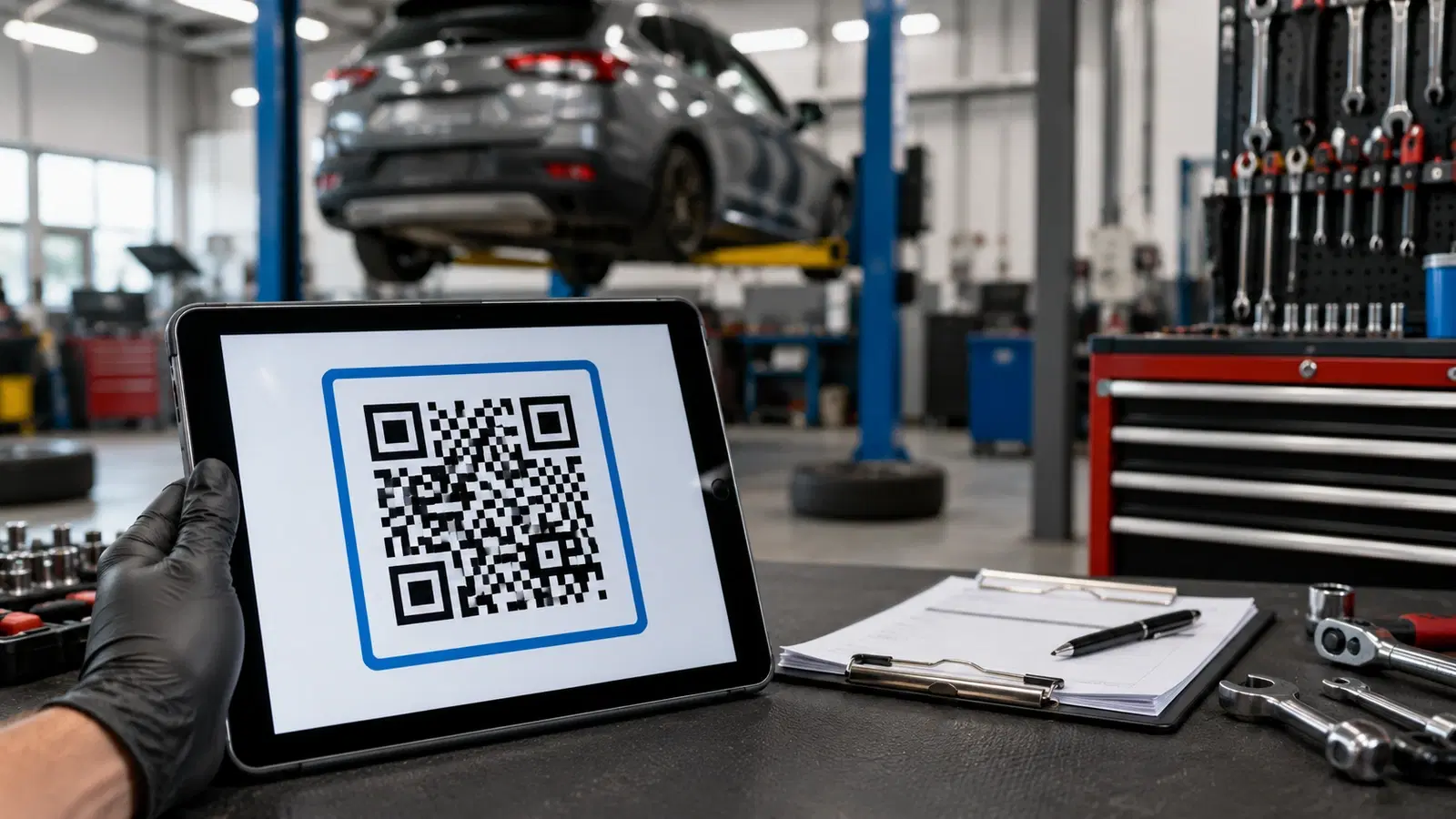
Auto repair is a trust business. Customers hand over their car and their money on the basis of believing the shop is honest, competent, and fair, and many arrive already wary because the industry has a reputation problem. The shops that win are the ones that earn trust through transparency and then keep customers coming back.
QR codes help a repair shop do exactly that. They make repair recommendations transparent with photos and explanations, they capture the reviews that reassure the next wary customer, and they keep drivers returning for service instead of drifting to a competitor.
This guide covers how auto repair shops and mechanics use QR codes across the customer relationship, from the transparency that builds trust during a repair to the retention that turns a one-time visitor into a regular. It is a companion to our car dealerships guide, focused specifically on the service and repair side rather than sales.
Use Case 1: Transparent Repair Updates and Approvals
The biggest trust problem in auto repair is the customer's fear of being told they need work they cannot see or verify. QR codes and digital vehicle inspections address this directly, and it is where they add the most value.
The transparency approach: Modern repair shops increasingly use digital vehicle inspections, where the technician documents findings with photos and videos. A QR code sent to the customer, or on their paperwork, links to this inspection report. The customer sees photos of the worn brake pads, the leaking gasket, the corroded part, alongside the recommendation.
Why this transforms trust: A customer who sees a photo of their actual worn brake pads believes the recommendation in a way they never would from a phone call saying "you need new brakes." Showing rather than telling removes the suspicion that the shop is inventing work. Transparency is the single most powerful trust-builder in auto repair, and QR codes deliver it.
Approval and authorization: A QR code linking to a page where the customer can review recommended work with explanations and approve it digitally. This lets a customer at work, unable to take a call, review the findings and authorize repairs on their phone, keeping the job moving.
Educational context: Linking recommendations to short explanations or videos ("why worn brake pads matter," "what this part does") helps customers understand the value of the work rather than feeling pressured. An informed customer is a comfortable customer.
The result: A shop that shows its work, explains its recommendations, and lets customers approve at their own pace earns trust that translates directly into approved repairs and loyal customers. In an industry defined by suspicion, transparency is a genuine competitive advantage, and it earns the reviews discussed next.
Pro Tip
Photos and short videos of the actual problem, delivered via a QR code, do more to build trust and get repairs approved than any amount of verbal explanation. A customer who sees their own worn part believes you. This transparency is the highest-value use of QR codes in auto repair.
Use Case 2: Reviews and Reputation
For an auto repair shop, reviews are decisive, because a wary customer choosing where to take their car relies heavily on what others say. Building strong reviews is among the most valuable things a shop can do.
The QR code approach: A QR code at checkout, on the invoice, or in the follow-up communication, linking to your review page. A customer who just had a good, transparent experience is your best review candidate, and the moment of pickup is when to ask.
Why the transparency-then-review sequence works: A customer who saw photos of their actual problem, understood the work, and felt fairly treated is not just satisfied, they are relieved and impressed, because they came in braced for the opposite. That is a powerful moment to ask for a review, and those reviews often mention the transparency specifically, which is exactly what reassures the next customer.
Where to place review QR codes:
- On the invoice handed over at pickup
- At the checkout counter
- In the follow-up text or email after service
- On a leave-behind card
The honest ask: "If you had a good experience, a review would really help us. Just scan here." Ask satisfied customers for honest reviews only, never incentivized, following platform rules. See our Google reviews guide.
The reputation flywheel: Reviews that praise transparency and fair treatment attract customers who were burned elsewhere and are looking for a shop they can trust. Those customers, treated the same way, leave the same reviews. For an auto shop, this is how a reputation compounds, and a QR code at pickup is what keeps it turning.
Use Case 3: Service History and Retention
The profitable customer is the one who comes back for every oil change, brake job, and service instead of shopping around. QR codes support the retention that makes a repair shop stable and predictable.
Service reminder QR codes: A QR code on service reminders (for the next oil change, inspection, or scheduled maintenance) linking to booking. A reminder with a one-scan booking path converts far better than one asking the customer to call. Since vehicle maintenance is predictable, these reminders are a reliable source of repeat business when they are easy to act on.
Service history QR codes: A QR code linking to the vehicle's service history at your shop gives the customer a record and makes your shop the natural place to continue service, since you hold the history. It also positions you as organized and professional.
Contact-saving QR codes: A vCard QR code that saves your shop's contact to the customer's phone, so when something goes wrong, you are in their contacts rather than a search result where competitors appear. See our vCard guide.
Maintenance schedules and tips: A QR code linking to the vehicle's recommended maintenance schedule, or seasonal tips (winter prep, summer AC check), keeps you top of mind as the helpful expert and prompts timely service bookings.
Loyalty and packages: For shops offering service packages or loyalty programs, a QR code for enrollment and tracking makes participation easy and encourages repeat visits.
Why retention is the whole business: A repair shop with a base of loyal, returning customers is stable and profitable, while one dependent on constantly acquiring new customers is fragile and expensive to run. Every QR code that makes rebooking easy, keeps you in the customer's contacts, and prompts timely maintenance directly builds that loyal base.
- Service reminder QR with one-scan booking for predictable repeat work
- Service history QR that makes your shop the natural place to continue
- Contact-saving vCard QR so you are in the customer's phone
- Maintenance schedule and seasonal tip QR to prompt timely bookings
- Retention is cheaper and more stable than constant new acquisition
Use Case 4: Payments, Documentation, and Shop Operations
A few more use cases support the day-to-day running of a repair shop and the customer experience.
Payment QR codes: A QR code that lets customers pay from their phone, useful for contactless payment, paying a deposit to authorize work, or settling up quickly at a busy counter. Faster, easier payment helps cash flow and customer convenience. See our payments guide.
Warranty and documentation QR codes: A QR code linking to warranty information for the parts and work performed gives the customer confidence and a reference. It reduces "is this covered" questions and reinforces professionalism.
Estimate and quote QR codes: A QR code on your signage or website linking to a quote or estimate request, capturing potential customers who are comparing shops.
Financing information: For larger repairs, a QR code linking to financing or payment plan options helps customers say yes to necessary but expensive work they might otherwise defer or take elsewhere.
Waiting area and amenities: A QR code in the waiting area linking to WiFi, refreshment information, or an estimated completion time improves the experience for customers waiting on their vehicle. See our WiFi QR guide.
Recall and safety checks: A QR code linking to recall lookups or safety information provides a helpful service and a reason for customers to engage with your shop.
The operations principle: Each of these smooths a friction point in the shop's operation or the customer's experience. Individually small, together they make the shop run more smoothly and feel more professional, which supports the trust and retention that drive the business.
Important
For repair approvals and payments handled via QR code, always confirm the customer has genuinely authorized the work and that payment has actually cleared in your own system before proceeding or releasing the vehicle. The QR code makes approval and payment convenient, but the shop still needs its normal verification, not just the customer saying it is done.
Conclusion
Auto repair is a trust business, and QR codes help a shop earn trust and keep it. Transparent digital inspections delivered by QR code show customers the actual problem, which builds the trust that gets repairs approved and turns wary first-timers into believers. Reviews captured at pickup reassure the next cautious customer. Service reminders, history, and contact-saving codes keep drivers coming back instead of drifting to a competitor.
The sequence matters: transparency during the repair produces a relieved, impressed customer, that customer leaves a review praising your honesty, that review attracts the next customer who was burned elsewhere, and retention tools keep them all coming back. QR codes power every step of that loop, and they do it on the materials a shop already uses: the inspection report, the invoice, the service reminder.
Start with transparent repair updates and a review code at pickup, the two that most directly build the trust and reputation an auto shop lives on, and expand from there.
Related reading:
Create QR codes for your repair shop with QRForever. Start a 7-day full-access trial, no credit card needed. Begin with transparent repair updates and a review code at pickup.
Explore QRForever Solutions
Ready to Create Your Own QR Codes?
Start creating dynamic QR codes for your business today. Track analytics, update content anytime, and never reprint again.
Related Articles
QR Code Menus for Restaurants: The Complete Setup Guide (Updated 2026)
Step-by-step guide to implementing QR code menus in your restaurant. Covers menu format options, placement strategy, staff training, and the one mistake that causes reprints. Updated May 2026.

QR Codes for Events: Conferences, Trade Shows & Beyond (Updated 2026)
QR codes turn events from logistical pain into smooth data-rich experiences: instant check-in, smart networking, lead capture for exhibitors, and post-event ROI you can actually prove. Updated May 2026 with the current best practices.
QR Codes on Product Packaging: Engaging Consumers Beyond the Shelf (Updated 2026)
Product packaging is your most-distributed marketing surface. Every unit on every shelf, in every home. QR codes turn that surface into a measurable, updatable channel for engagement, loyalty, and product education. Updated May 2026.